This page is not a current Christchurch City Council document. Please read our disclaimer.

Road injury crash statistics relate to the number and severity of crashes or collisions involving injury, reported to Police. The severity of a crash is based on the severity of the most seriously injured casualty in the crash.
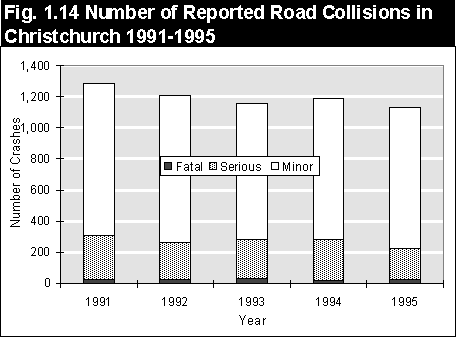
Except for a slight increase in 1994, the number of injury crashes[24] in Christchurch, has declined since 1991. During this period the number of crashes dropped by 155 or 12 percent (Table 1.8 and Figure 1.14). This pattern of decline generally reflects national trends during the first half of this decade. In 1995, reported injury crashes dropped to 1,132, the lowest this decade. As Table 1.8 and Figure 1.14 show, this reduction is largely attributable to fewer serious crashes during the year.
Fatal crashes in 1995 again increased after a noticeable drop in 1994. The majority of fatal crashes (22) were in urban areas with speed limits less than 80 km/h while five fatal crashes occurred in rural parts of the City[25].
| Table 1.8 Number of Reported Road Collisions in Christchurch, 1991-1995 | ||||||
1991 |
1992 |
1993 |
1994 |
1995 |
Total |
|
| Fatal | 26 |
27 |
32 |
19 |
27 |
131 |
| Serious | 278 |
236 |
250 |
261 |
197 |
1,222 |
| Minor | 983 |
946 |
874 |
906 |
908 |
4,617 |
| Total Injury | 1,287 |
1,209 |
1,156 |
1,186 |
1,132 |
5,970 |
| Non-Injury | 1,967 |
1,841 |
1,519 |
1,645 |
1,723 |
8,695 |
Source: Land Transport Safety Authority, Road Safety Report for Christchurch City (July 1996)
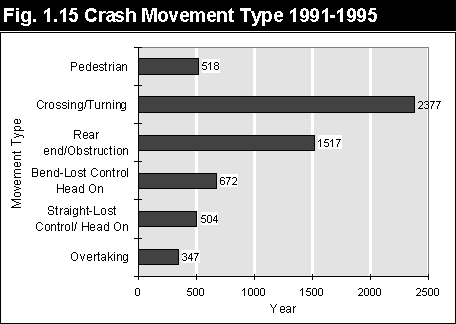
Figure 1.15 shows the types of reported injury crashes in Christchurch between 1991 and 1995 (ie what the vehicle was physically doing at the time of the crash). During this period, the main crash type involved vehicles crossing and turning at intersections[26] followed by rear end/obstruction crashes.
Source: Land Transport Safety Authority, Road Safety Report for Christchurch City, July 1996
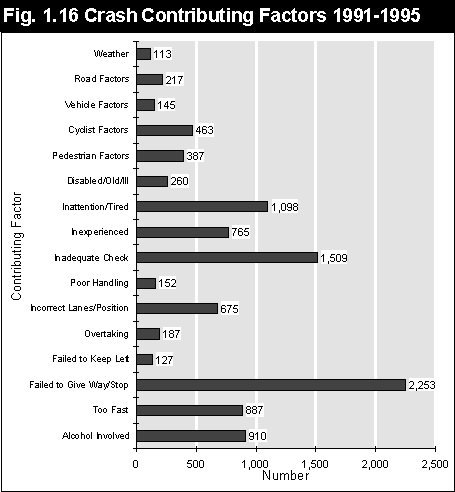
Factors contributing to crashes help explain why the crashes happen[27]. The main contributing factor to crashes between 1991 and 1995 were associated with intersections and driveways, namely ‘Failed to give way or stop’, and ‘Inadequate check[28]’. Inattention/Tired was the third major contributing factor during this period. This factor also relates in part to intersection crashes (Figure 1.16).
Source: Land Transport Safety Authority, Road Safety Report for Christchurch City (July 1996)
The injury crash rate per 10,000 people in Christchurch has been consistently higher than the national figure for many years, but has declined significantly from 51.9 to 37.0 per 10,000 people between 1980 and 1995 (Figure 1.17). Despite the overall decline in the crashes per 10,000 people, Christchurch still has the highest crash rate of the main centres (Figure 1.18), although latest statistics show that the gap appears to be closing.
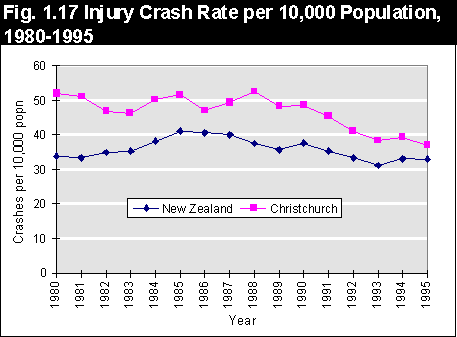
Source: Land Transport Safety Authority, Road Safety Report for Christchurch City, July 1996
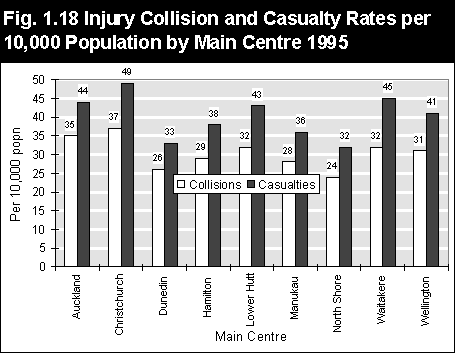
Source: Land Transport Safety Authority, Road Safety Report for Christchurch City, July 1996
Road casualty statistics refer to the number of people injured during crashes and the severity of those injuries. This differs from road crash statistics which relate to the number and severity of crashes involving injury. Table 1.9 and Figure 1.19 show the number of road casualties from 1991 to 1995 by their severity. With the exception of 1994, the number of casualties in the City declined during this period. This overall decline was mainly a result of fewer serious casualties. Overall road casualties in Christchurch show a similar downward pattern to national figures.
The number of road deaths fluctuated between 1991 and 1995, peaking in 1993 with 38 deaths. During this period, a total of 141 people died on City roads.
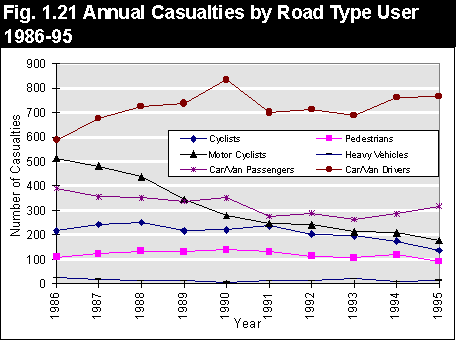
Drivers and passengers experienced the greatest number of casualties in Christchurch between 1991 and 1995 (Figure 1.20). In the last two years the driver and passenger casualties increased considerably (Figure 1.21).
Motorcyclist, and cyclists were also significant casualty groups between 1991 and 1995 although the number of casualties in both these groups have declined noticeably in recent years (Figure 1.21). This decrease may reflect changing road safety practices such as the wearing of cycle helmets, but it also may be a result of more people choosing to travel by car.
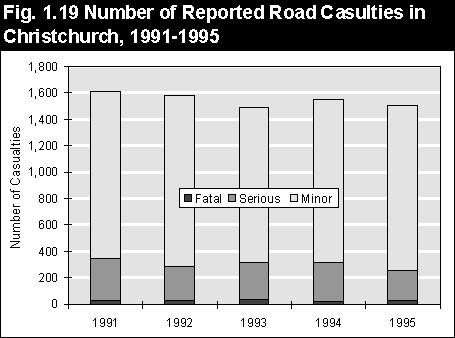
Source: Land Transport Safety Authority, Road Safety Report for Christchurch City, July 1996
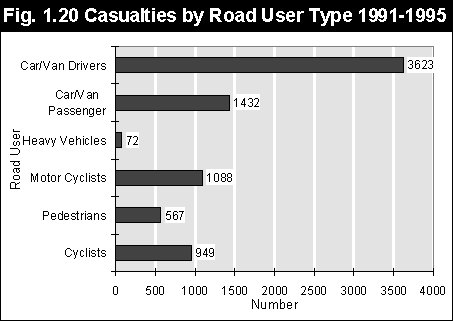
Source: Land Transport Safety Authority, Road Safety Report for Christchurch City, July 1996
| Table 1.9 Number of Reported Road Casualties in Christchurch, 1991-1995 | ||||||
1991 |
1992 |
1993 |
1994 |
1995 |
Total |
|
| Fatal | 27 |
29 |
38 |
20 |
27 |
141 |
| Serious | 319 |
255 |
279 |
293 |
228 |
1,374 |
| Minor | 1,263 |
1,295 |
1,170 |
1,239 |
1.252 |
6,219 |
| Total Casualties | 1,609 |
1,579 |
1,487 |
1,552 |
1,507 |
7,734 |
Source: Land Transport Safety Authority, Road Safety Report for Christchurch City, July 1996
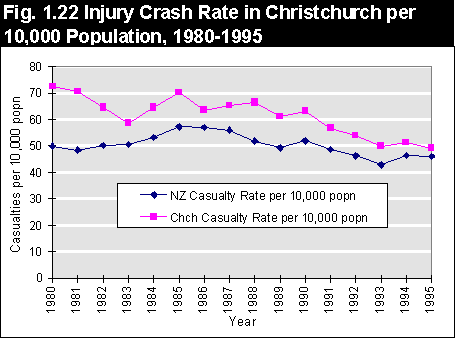
During 1995 the casualty rate per 10,000 people in Christchurch was noticeably higher than the other main centres (Figure 1.18). Despite the higher casualty rate in the City, levels have declined significantly over recent years in line with national trends (Figure 1.22).