
This page is not a current Christchurch City Council document. Please read our disclaimer.

Between 1996 and 2016, the age structure of Christchurch’s population will undergo major change. Essentially, there will be progressively fewer young people in the population and generally more elderly people (Table 1.3). These changes will be reflected in the median age of the population (half the population is older than this figure) which will rise from 33.9 in 1996 to just over 40 years by 2016.
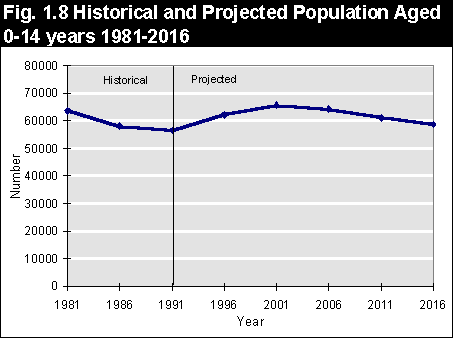
The number of children aged under 15 years living in the City declined steadily between 1981 and 1991. During this ten year period, this group dropped from 63,531 to 56,448 (Table 1.3). Proportionately, the under 15 years group also declined from 23.1 percent to 19.5 percent of the resident population during this period.
The latest population projections suggest that the number and proportion of children in the City will increase initially between 1996 and 2001 and then decline through to the end of the projection period (Table 1.3 and Figure 1.8). These trends largely reflect changes in the size of the population of childbearing age.
Source: Statistics New Zealand, Census of Population and Dwellings, Population Projections (January 1996)
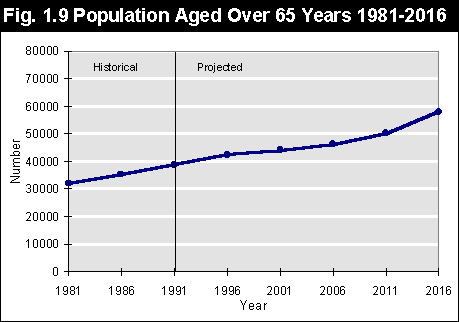
In contrast, the City’s elderly population (65 years and over) increased substantially during the 1980s reflecting national trends. In 1981, people aged over 65 numbered 32,070 or 11.6 percent of the resident population. Ten years later the elderly numbered 38,793 people and comprised 13.4 percent of the population. By 2016, the older age group is expected to increase to around 16.3 percent of the population and number around 57,900 people (Table 1.3 and Figure 1.9)
Source: Statistics New Zealand, Census of Population and Dwellings, Population Projections (January 1996)
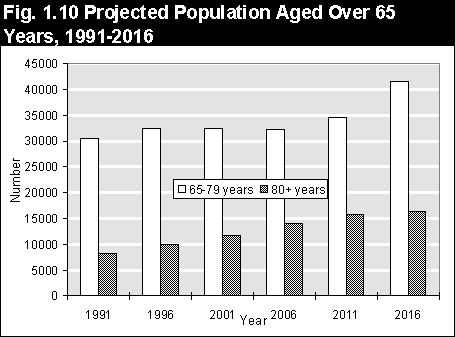
According to demographers, the increase in the number of elderly will not be evenly distributed across all older age groups. There will be some fluctuation in the number and proportion of people aged 65-79 years during each intercensual period but the most consistent increase will occur in the ‘older elderly’ age group (people aged 80 years and over). This is in part the result of this age group extending its upper limit as life expectancy increases (Figure 1.10).
There will also be more women than men in the City’s elderly population. Although more males than females are born, females tend to live longer than males. This results in greater number of females in the population especially in the older age groups.
The growing number of elderly in the population can be expected to increase the demand for public transport, better access to appropriate housing, medical and welfare facilities.
Ageing is associated with an increased risk of disability. As people age, they have a higher incidence of chronic disease, and a greater risk of injury as they become physically frail. With increasing life expectancy, the number of years free of disability may also increase. However, the rate at which gains are made in disability free life is not expected to be as great as that of total life expectancy. This means that while people may expect to be healthy for longer, they can also expect to live even longer still with some level of incapacity[10].
Source: Statistics New Zealand, Census of Population and Dwellings, Population Projections (January 1996)
The elderly have tended to live for most of their retirement years as couples or independently in private dwellings. The forecast improvement in life expectancy may pose a threat to this degree of independence. For the period of possible incapacity families may have to choose between the cost of institutional care or support within the family home. However, this choice will be complicated by the fact that many of the elderly’s potential caregivers will themselves be elderly.